
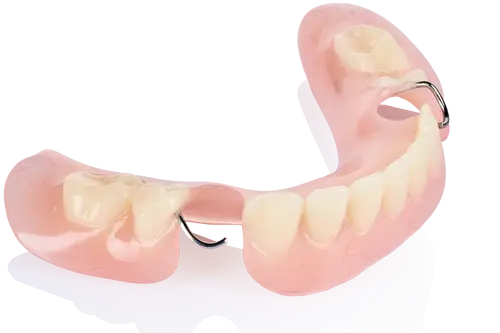
Dental frameworks are the structural foundation behind many successful prosthetic restorations. Whether used in removable partial dentures, fixed bridges, or implant-supported full-arch cases, the framework determines how well a restoration performs in terms of strength, fit, stability, longevity, and force distribution. In modern dentistry, framework selection is no longer just a technical choice. It affects aesthetics, patient comfort, digital workflow compatibility, and long-term clinical predictability.
For dental practices and laboratory partners, understanding dental frameworks means understanding the hidden architecture that supports restorative success. Different materials such as cobalt-chromium, titanium, zirconia, and high-performance polymers each bring distinct advantages and limitations. At the same time, digital manufacturing methods such as CAD/CAM milling and 3D printing are changing how frameworks are designed, fabricated, and quality-controlled. Below is a comprehensive overview of dental frameworks, including their definition, types, materials, applications, fabrication methods, benefits, limitations, and future direction.
What is a dental framework?
A dental framework is the internal supporting structure of a dental prosthesis. It acts as the base that carries restorative components such as denture bases, artificial teeth, veneering materials, or implant superstructures.
Core structural role
In prosthetic dentistry, frameworks are essential because they provide strength and rigidity, support functional loading during mastication, help ensure retention and stability, transfer forces to teeth, soft tissues, or implants, and maintain the shape and integrity of the restoration over time.
A framework may remain hidden within the restoration, but it largely determines whether the final prosthesis performs well clinically.
Why frameworks matter
A well-designed framework helps reduce complications such as fracture or deformation, poor fit, excessive stress on abutment teeth, implant overload, instability during function, and poor patient adaptation.
In short, if the framework fails, the prosthesis usually follows.
Types of dental frameworks
Dental frameworks vary based on the prosthesis type, support system, and intended function.
Removable partial denture frameworks
These frameworks are used in removable partial dentures for partially edentulous patients.
Their job is to support the denture base and artificial teeth, engage abutment teeth through clasps or precision attachments, distribute occlusal forces appropriately, and improve stability and retention.
Traditional RPD frameworks are often made from cobalt-chromium alloys, though polymers such as PEEK and acetal resin are increasingly used in selected cases.
Fixed partial denture frameworks
These frameworks are used in bridges and other fixed restorations.
They serve as the core structure that connects pontics to retainers, resists fracture under load, supports veneering ceramic or composite, and maintains dimensional stability.
Framework materials for fixed prosthetics commonly include zirconia, metal alloys, titanium, and lithium disilicate in more selective indications.
Implant-supported frameworks
These frameworks are used in implant-supported restorations, including full-arch prostheses, hybrid dentures, implant bridges, and All-on-4 or All-on-X restorations.
Their function is especially critical because they must connect accurately to implants, resist repeated occlusal forces, maintain passive fit, and support long-span restorations with minimal distortion.
Common materials include titanium, cobalt-chromium, zirconia, and PEEK in selected restorative concepts.
Maxillofacial and specialty frameworks
Frameworks may also be used in obturators, facial prostheses, complex removable restorations, and rehabilitative prosthetic designs.
These cases often require highly customized design and advanced lab communication.
Materials used in dental frameworks
Material selection is one of the most important framework decisions because it affects strength, weight, aesthetics, fit, repairability, and manufacturing method.
Metal-based frameworks
Metal frameworks remain highly relevant because of their strength and long clinical history.
Cobalt-chromium
Cobalt-chromium is one of the most widely used framework materials, especially in removable prosthodontics.
It offers high strength, good corrosion resistance, favorable rigidity, relatively thin framework design, and proven clinical performance.
It is especially common in RPD frameworks.
Titanium
Titanium is widely used for implant-supported frameworks because of its excellent biocompatibility, low weight, corrosion resistance, and suitability for implant interfaces.
It is often preferred in implant cases where biological compatibility and reduced weight are priorities.
Precious alloys
Gold- and platinum-based alloys are less common today because of cost, but they still offer excellent biocompatibility, good corrosion resistance, and reliable long-term performance.
Their use is generally limited to more specialized or premium restorative cases.
Ceramic-based frameworks
Ceramic frameworks are valued primarily for their aesthetics and tissue compatibility.
Zirconia
Zirconia is a leading framework material in modern restorative dentistry.
Its main advantages include high flexural strength, tooth-colored appearance, good biocompatibility, favorable wear performance when properly finished, and suitability for fixed and implant-supported restorations.
Zirconia is especially relevant where aesthetics matter, including anterior and full-arch prosthetics.
Lithium disilicate
Lithium disilicate is more commonly associated with monolithic restorations than large framework designs, but it remains relevant for aesthetic fixed restorations requiring strength and translucency.