Table of Contents
- Introduction
- Titanium Dental Implants: The Gold Standard
- Zirconia Dental Implants: The Ceramic Alternative
- Head-to-Head Comparison
- Clinical Considerations and Case Selection
- Future Developments in Implant Materials
- Conclusion
Introduction
The choice of implant material is one of the most consequential decisions in modern restorative dentistry. For decades, titanium has dominated the dental implant market, earning its reputation as the “gold standard” through decades of clinical success. However, the emergence of zirconia (zirconium dioxide) as a viable alternative has introduced a new dimension to treatment planning, particularly for patients with specific aesthetic or biocompatibility concerns.
This comprehensive guide examines both materials across multiple dimensions—mechanical properties, biological response, aesthetic outcomes, clinical performance, and cost considerations—to help dental professionals make evidence-based decisions for their patients.
Titanium Dental Implants: The Gold Standard
Material Properties
Titanium implants are typically manufactured from commercially pure titanium (Grades 1–4) or titanium alloy (Grade 5, Ti-6Al-4V). The material’s exceptional strength-to-weight ratio, corrosion resistance, and ability to osseointegrate—the process by which bone fuses directly to the implant surface—have made it the most widely used implant material worldwide.
Key mechanical properties of titanium implants include:
- Tensile strength: 240–550 MPa (commercially pure) to 900+ MPa (alloy)
- Elastic modulus: ~110 GPa, which is higher than cortical bone (~14 GPa), creating a degree of stress shielding
- Fracture toughness: High resistance to crack propagation
- Fatigue resistance: Excellent long-term cyclic loading performance
Surface Treatments and Osseointegration
The success of titanium implants is closely tied to surface modification technologies. Modern titanium implants undergo treatments such as sandblasting, acid etching, anodization, or plasma spraying to create micro-rough surfaces that enhance osteoblast attachment and accelerate osseointegration. These surface treatments can reduce the healing period from the traditional 3–6 months to as little as 4–6 weeks in favorable cases.
Long-Term Clinical Track Record
Titanium implants boast one of the most extensively documented clinical histories in dentistry. Survival rates of 94–97% over 10 years and 89–95% over 15 years have been consistently reported across multiple systematic reviews. This long-term data provides clinicians with a high degree of predictability when treatment planning.
Zirconia Dental Implants: The Ceramic Alternative
Material Composition and Properties
Zirconia implants are made from yttria-stabilized tetragonal zirconia polycrystal (Y-TZP), a ceramic material that offers a unique combination of strength and aesthetics. The tetragonal phase is maintained at room temperature through yttria stabilization, and the material exhibits a phenomenon known as transformation toughening—when a crack forms, the crystal structure transforms from tetragonal to monoclinic, expanding slightly and compressing the crack tip to resist further propagation.
Key properties of zirconia implants include:
- Flexural strength: 900–1200 MPa, comparable to or exceeding titanium alloy
- Elastic modulus: ~210 GPa, significantly higher than titanium
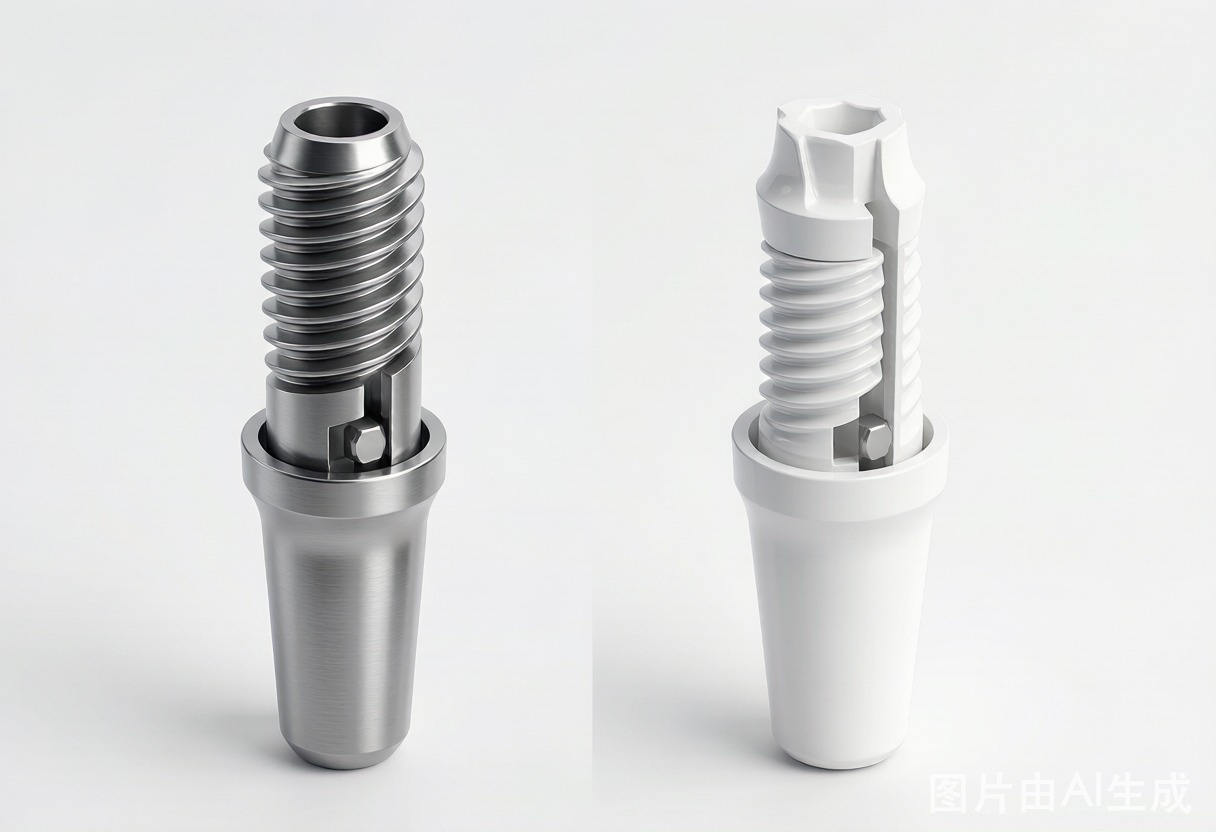
- Color: Tooth-white/ivory, eliminating gray show-through in thin gingiva
- Corrosion resistance: Chemically inert in the oral environment
Aesthetic Advantages
The tooth-colored appearance of zirconia is perhaps its most clinically significant advantage. In patients with thin gingival biotypes or those requiring implants in the anterior zone, titanium implants can sometimes create a grayish shadow through the soft tissue. Zirconia eliminates this concern, providing superior soft-tissue aesthetics and a more natural emergence profile.
Biocompatibility and Soft Tissue Response
Zirconia demonstrates excellent biocompatibility with both hard and soft tissues. Studies have shown that zirconia surfaces promote favorable fibroblast attachment, potentially creating a stronger soft-tissue seal around the implant neck. This may contribute to reduced bacterial colonization and lower rates of peri-implantitis, although long-term comparative data is still accumulating.
Head-to-Head Comparison
| Parameter | Titanium | Zirconia |
|---|---|---|
| Osseointegration | Decades of evidence; 95%+ survival at 10 years | Promising but shorter track record; 91–95% at 5–7 years |
| Aesthetics | Gray metallic color; may show through thin tissue | Tooth-white; ideal for anterior and thin biotype cases |
| Mechanical Strength | Excellent; proven under dynamic loading | High flexural strength but lower fracture toughness |
| Corrosion Resistance | Excellent (passive oxide layer) | Superior (chemically inert ceramic) |
| Allergy Risk | Rare but possible (metal sensitivity) | Extremely low (metal-free) |
| Cost | Moderate (widely available) | Higher (specialized manufacturing) |
| Design Flexibility | Two-piece designs common; abutment flexibility | Primarily one-piece; two-piece options emerging |
Clinical Considerations and Case Selection
When to Choose Titanium
Titanium remains the preferred choice for most general implant cases, particularly when:
- Long-term predictability is paramount
- Patient has adequate soft tissue thickness
- Two-piece implant design is needed for prosthetic flexibility
- Budget constraints are a factor
- Immediate loading protocols are planned
When to Choose Zirconia
Zirconia implants are particularly advantageous when:
- Aesthetic demands are high, especially in the anterior region
- Patient has thin gingival biotype
- Patient has confirmed metal sensitivity or allergies
- Patient prefers metal-free restorations
- Soft tissue health and seal are primary concerns
The Role of Digital Planning
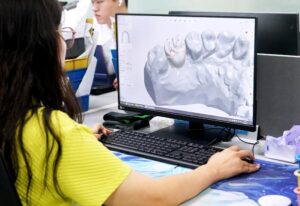
Regardless of material choice, digital implant planning using CBCT imaging and intraoral scanning has become essential for optimizing implant placement. Digital workflows allow clinicians to evaluate bone density, plan ideal prosthetic positioning, and fabricate surgical guides that ensure precise osteotomy preparation—factors that significantly influence outcomes regardless of whether titanium or zirconia is used.
Future Developments in Implant Materials
Research continues to advance both material categories. Surface modifications for titanium—including bioactive coatings, nanotexturing, and drug-eluting surfaces—aim to further accelerate osseointegration and reduce infection risk. For zirconia, improvements in manufacturing sintering processes, the development of reliable two-piece designs, and enhanced surface treatments are addressing current limitations.
Emerging materials such as PEEK (polyetheretherketone) composites and bioactive glass ceramics are also under investigation, though they remain experimental for load-bearing implant applications.
Conclusion
The titanium versus zirconia debate is not about superiority but about suitability. Titanium offers an unmatched long-term clinical track record and prosthetic versatility, making it the default choice for most cases. Zirconia provides compelling aesthetic and biocompatibility advantages that make it invaluable for specific clinical scenarios, particularly in the aesthetic zone and for patients with metal sensitivities.
The most successful implant practices are those that offer both options, selecting the material that best matches each patient’s clinical presentation, aesthetic requirements, and personal preferences. As zirconia technology continues to mature and long-term data accumulates, the gap between these two materials will likely narrow, giving clinicians even more flexibility in achieving optimal patient outcomes.
Need expert dental lab support for your implant cases? Partner with a laboratory that understands both titanium and zirconia workflows. Contact us to learn how our digital implant prosthetics services can streamline your practice.