Table of Contents
- Introduction
- Crown Material Categories
- Monolithic Zirconia Crowns
- Porcelain-Fused-to-Metal (PFM) Crowns
- All-Ceramic and Lithium Disilicate Crowns
- Gold and Metal Alloy Crowns
- Clinical Decision Framework
- Digital Workflow Integration
- Conclusion
Introduction
Selecting the appropriate crown material is a critical decision that influences not only the longevity of the restoration but also patient satisfaction, aesthetic outcomes, and overall treatment success. With an expanding array of materials available—each with distinct mechanical, aesthetic, and biological properties—clinicians must weigh multiple factors to arrive at the optimal choice for each individual case.
This guide provides a structured framework for crown material selection, drawing on current evidence and clinical best practices to support decision-making across a range of scenarios.
Crown Material Categories
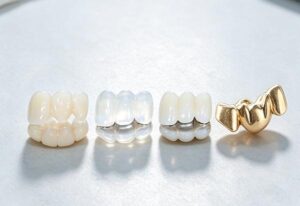
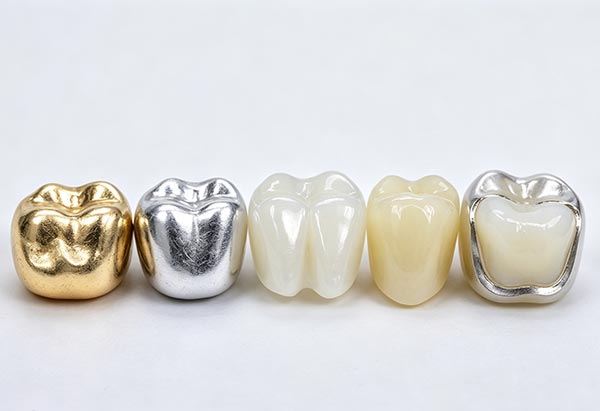
Modern dental crown materials can be broadly categorized into five groups, each with specific indications, advantages, and limitations:
- Monolithic zirconia – High-strength ceramic, single-component
- Porcelain-fused-to-metal (PFM) – Metal substructure with ceramic veneer
- All-ceramic (lithium disilicate) – Glass-ceramic with excellent aesthetics
- Gold and metal alloys – Traditional cast metal restorations
- Hybrid/composite-based – Polymer-ceramic blends for specific applications
Monolithic Zirconia Crowns
Monolithic zirconia has become one of the most prescribed crown materials in modern dentistry. Milled from solid blocks of Y-TZP ceramic, these crowns offer exceptional flexural strength (800–1200 MPa) and fracture toughness, making them suitable for posterior restorations subject to high occlusal forces.
Advantages
- Outstanding mechanical strength for high-load areas
- No chipping risk (no layered porcelain)
- Biocompatible and chemically stable
- Reasonable aesthetics with newer high-translucency formulations
- Efficient CAD/CAM production workflow
Limitations
- May appear opaque in high-aesthetic-demand situations
- High hardness can cause antagonistic tooth wear
- First-generation zirconia had limited translucency
Best Indications
Posterior single crowns, bruxism patients, implant-supported crowns, and cases where strength is prioritized over maximum aesthetics. Recent generations of high-translucency zirconia (3Y-TZP and 5Y-TZP blends) have expanded indications to include anterior restorations with acceptable aesthetic outcomes.
Porcelain-Fused-to-Metal (PFM) Crowns
PFM crowns have been a workhorse in restorative dentistry for over half a century. A metal coping provides structural support, while a layered ceramic veneer delivers the tooth-like appearance. Despite the rise of all-ceramic alternatives, PFMs remain relevant for specific clinical situations.
Advantages
- Proven long-term clinical performance (30+ years of data)
- Excellent marginal fit with cast metal copings
- Adjustable aesthetics through ceramic layering
- Cost-effective compared to some all-ceramic options
Limitations
- Risk of porcelain chipping or fracture
- Potential for gray gingival discoloration at margins
- Requires more tooth reduction than monolithic options
- Metal allergies in sensitive patients
Best Indications
Long-span bridges where material strength is critical, patients with a history of PFM success, and budget-conscious treatment plans. PFMs remain a reliable choice when aesthetics requirements are moderate and mechanical demands are high.
All-Ceramic and Lithium Disilicate Crowns
Lithium disilicate glass-ceramic (e.g., IPS e.max) represents the gold standard for aesthetic anterior crowns. With a flexural strength of 360–500 MPa and exceptional optical properties, it closely mimics natural tooth enamel in translucency, fluorescence, and opalescence.
Advantages
- Superior aesthetics—closely mimics natural enamel
- Excellent marginal adaptation
- Adhesive bonding capability enhances retention
- Lower antagonistic wear compared to zirconia
Limitations
- Lower fracture strength than zirconia—less ideal for molars
- Technique-sensitive bonding procedure
- Higher cost for material and processing
Best Indications
Anterior crowns and veneers, premolar restorations, patients with high aesthetic expectations, and cases requiring conservative tooth preparation where adhesive bonding can compensate for reduced mechanical retention.
Gold and Metal Alloy Crowns
While less frequently requested in today’s aesthetic-conscious market, gold crowns remain the most durable and kind-to-tooth restoration available. High-noble gold alloys offer unmatched marginal fit, functional longevity, and biocompatibility.
Advantages
- Exceptional longevity (20–30+ year service life)
- Minimal tooth reduction required
- Ideal marginal seal through burnishability
- No wear on opposing dentition
- Excellent for patients with heavy occlusal forces
Limitations
- Non-aesthetic metallic appearance
- Rising gold costs affect affordability
- Limited patient acceptance for visible areas
Clinical Decision Framework
The following framework integrates the key decision factors to guide material selection:
| Clinical Scenario | Recommended Material | Rationale |
|---|---|---|
| Anterior crown, high aesthetic demand | Lithium disilicate | Best enamel mimicry and translucency |
| Posterior molar crown, heavy occlusion | Monolithic zirconia | Highest fracture resistance |
| Premolar crown, moderate aesthetics | Zirconia or lithium disilicate | Both viable; case-dependent |
| Bruxism patient, full-mouth rehab | Monolithic zirconia | Withstands parafunctional forces |
| Implant-supported crown | Zirconia or PFM | Strength and screw-retained options |
| Long-span bridge (3+ units) | Zirconia or PFM | Structural integrity over span |
| Metal allergy patient | Zirconia or lithium disilicate | Metal-free biocompatibility |
Digital Workflow Integration
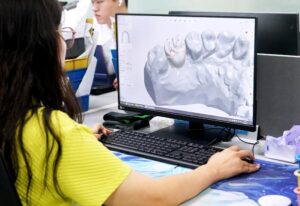
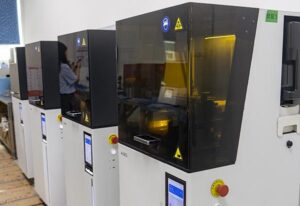
Modern crown material selection is increasingly intertwined with digital workflows. Intraoral scanning eliminates conventional impressions, while CAD/CAM systems enable precise design and milling of zirconia and lithium disilicate restorations in a single appointment. Digital shade matching systems improve color accuracy, and 3D printing of working models streamlines the laboratory process.
For practices outsourcing to dental laboratories, digital file transfer (STL files from intraoral scanners) reduces turnaround time and improves communication. The choice of crown material should factor in the lab’s capabilities—ensuring they have the equipment and expertise for the selected material system.
Conclusion
There is no single “best” crown material—only the best material for a given clinical situation. The key to successful outcomes lies in systematically evaluating each case based on location, occlusal forces, aesthetic requirements, patient preferences, and budget. By understanding the properties and indications of each material category, clinicians can make informed decisions that balance aesthetics, function, and longevity.
As digital dentistry continues to evolve, the integration of CAD/CAM technology, improved material formulations, and efficient lab partnerships will further streamline the crown fabrication process, making high-quality restorations more accessible and predictable than ever before.